Інтерв'ю
Interview with Matteo Rivellini, Head of the Ukraine Investment Team at the European Investment Bank
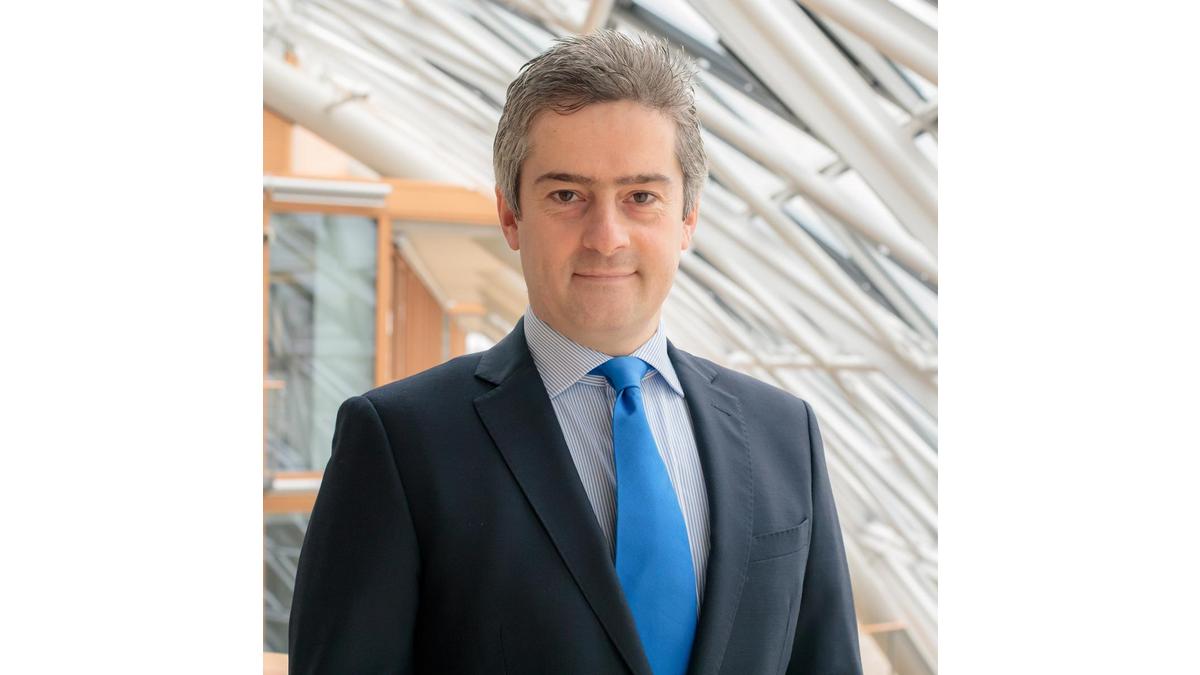
“The opportunities are real and available now. Companies that start exploring these opportunities today, building partnerships and assessing potential projects, will be better positioned to contribute to Ukraine’s reconstruction and play a role in its future economic development”.
1. How would you describe the EIB’s current role and priorities in Ukraine, and what has changed most significantly over the past year?
Ukraine remains one of the EIB Group’s top priorities. Our focus combines immediate resilience with long-term reconstruction and EU integration, particularly across energy, transport and connectivity, housing and municipal infrastructure, as well as private-sector development. Since the start of Russia’s full-scale invasion, EIB Group financing in support of Ukraine has reached more than €4.5 billion.
What has changed is the scale and intensity of our engagement and the instruments we deploy. The EIB has always combined financing with technical expertise, project preparation and implementation support. In Ukraine, we are reinforcing that model to respond to wartime conditions – with greater use of EU guarantees, risk-sharing and equity, alongside stronger support for project preparation and implementation capacity.
You can see this across our operations. We have adapted existing financing to respond quickly to urgent wartime needs, while at the same time building investments around Ukraine’s reconstruction and EU accession. In transport, for example, this means not simply restoring damaged infrastructure but supporting European-gauge rail links and modernising border crossings to connect Ukraine more closely to the EU.
In energy, we have supported emergency gas purchases to help Ukraine secure supplies ahead of winter, while at the same time investing in energy efficiency, renewable energy and stronger integration with the European energy system – supporting Ukraine’s longer-term decarbonisation.
And we are significantly strengthening project preparation and implementation, helping Ukrainian authorities turn reconstruction priorities into well-prepared projects and build the capacity to deliver them. At the scale Ukraine now requires, making financing available is only part of the challenge; it also has to be translated into projects that can be implemented quickly and effectively.
2. What concrete opportunities are there for French companies?
For French companies, the most relevant opportunities are the larger international tenders launched under EIB-financed projects in Ukraine. These tenders are open to international competition, meaning that French companies can bid directly, subject to the eligibility and qualification requirements of each tender.
Opportunities can arise across the sectors in which the EIB is financing investment, including transport, energy and municipal infrastructure. Depending on the project, contracts may cover equipment, works, engineering and other technical services.
The procurement is carried out by the Ukrainian beneficiary of the EIB financing – for example a ministry, municipality, public utility or state-owned company – rather than by the EIB itself.
3. What practical steps should a French company take?
Companies should therefore monitor the larger international procurement notices. These are published through the relevant procurement channels, including Ukraine’s Prozorro system and the EIB’s project procurement website, and, where applicable, through EU procurement channels such as TED.
For these larger international tenders, a French company can participate without necessarily having a Ukrainian entity or local partner. The specific conditions, however, are set out in each tender and need to be checked individually.
4. How can EIB guarantees help French companies manage risk?
To help European companies manage investment risks in Ukraine, the EIB, with the support of the European Commission, is preparing to launch €230m EU Foreign Direct Investment and Single Market Integration programme.
Under this programme, the EIB, in cooperation with partners such as Bpifrance, will be able to provide foreign direct investment guarantees (including political risk insurance) to support French companies investing in Ukraine. This support could also be complemented by long-term financing and, on a selective basis, investment grants.
5. How can French companies identify opportunities early?
French companies are encouraged to explore opportunities to participate in Ukraine’s reconstruction by engaging early with Ukrainian ministries, municipalities, state owned enterprises and private partners, particularly in energy, infrastructure, water, healthcare, agriculture, digital and demining.
They may also benefit from following project pipelines being developed with the EIB and other IFIs as well as leveraging the French institutional network to identify emerging opportunities. French companies could explore available risk-sharing instruments to help mitigate political and war-related risks, making early engagement more feasible.
6. What three things should a French company do in the next 30 days?
This is a question I would encourage any French company to ask. The opportunities are real and available now. Ukraine’s reconstruction is creating investment opportunities across all sectors, including energy, transport, and housing, and the decision to follow up today will shape and materialize Ukraine’s economy in the future.
Companies that start exploring these opportunities today, building partnerships and assessing potential projects, will be better positioned to contribute to Ukraine’s reconstruction and play a role in its future economic development.
The most valuable thing a company can do is to come away with clear understanding of what is possible today and what can be done. The companies doing best in Ukraine are the ones with good local or international partner. And no company is forced to do it alone.
European Union has created the right environment that enables investment through supporting frameworks and instruments such as Ukraine Facility, guarantees and grants. Subsequently, EU shares the risk and paths the way forward.
Companies with a defined project are welcome to come to us directly, and we would be glad to advise on what the EIB Group have to offer. For those at earlier stage, our partner banks in Ukraine are often more natural first step, where our credit lines sit with local experts who know the market best.
Whatever the stage and level of engagement, we are now involved in project preparation, technical assistance, and implementation support. 30 days is more than enough to find out what is possible.
No matter your size and scope of work, my best advice to anyone listening and reading, is to start the conversation today and take the first step towards better tomorrow.