Асоціація
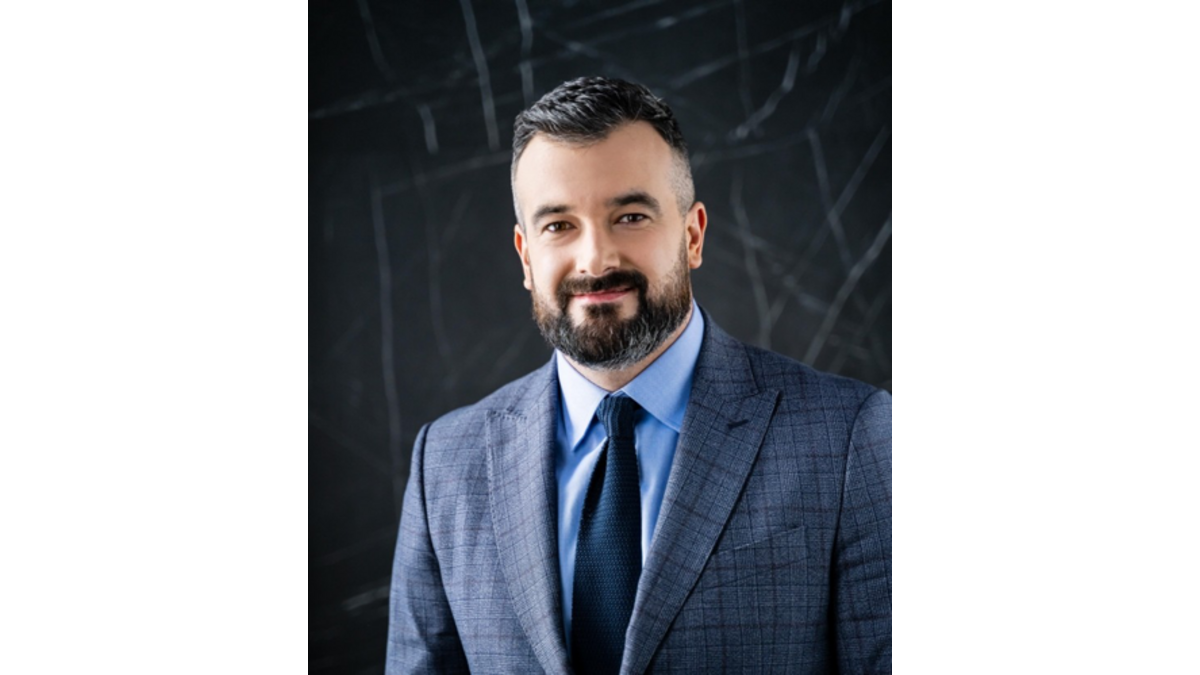
Five Recommendations for International Companies Considering Entry into Ukraine's Reconstruction Market, expert opinion by Yevhen Kalinin, CEO of Veolia Ukraine
When international companies examine business prospects in Ukraine, most discussions begin with a recurring question: what are the risks? War remains the main factor of uncertainty. However, over the past three years, a reality has emerged: there are challenges for international companies that are much less publicized, but which often determine the success or failure of a business.
It is not just about security risks. It is about understanding how the very model of Ukrainian reconstruction is taking shape, who is shaping it, where the financing will come from, and what partnerships are being formed right now.
The reconstruction market will not be born at the end of the fighting. It is already taking root. Even today, international financial organizations are defining their priority areas of support, Ukrainian municipalities are identifying their investment needs, and international companies are forging initial connections with their future partners.
That is why it is essential for international companies to pay attention, right now, to a few principles that could determine their place in the Ukrainian market for decades to come.
Do not wait for the war to end
The most serious strategic mistake is to believe that it is only worth getting involved in Ukraine once silence has returned to the battlefields.
Yet the foundations for future projects are being laid today.
According to the Fourth Rapid Damage and Needs Assessment (RDNA4), jointly developed by the World Bank, the European Commission, the UN, and the Ukrainian government, Ukraine’s reconstruction needs already exceed $500 billion. But most of these projects take shape long before the construction equipment arrives. First, partnerships are born, feasibility studies are prepared, sources of funding and implementation models are defined.
That is why companies entering the Ukrainian market today are investing, above all, in trust, partnerships, and their own local presence.
The strategic partnership between Veolia Ukraine and BGV Group Management illustrates this clearly. Its ambition is not limited to the completion of a single project, but to the preparation for the future modernization of water, energy, and waste management infrastructure. This is how the reconstruction market is built: partnerships are formed first, then concrete investment projects emerge.
Choose a partner, not an intermediary
Another common mistake made by international companies is to look in Ukraine not for a true partner, but for someone who is supposed to “solve all the problems.”
This approach almost always fails in large infrastructure projects.
European experience shows that the most successful models are based on a genuine tripartite partnership: the municipality, an international financial organization, and a private operator. Each plays a clear role: the local authority expresses the need, the international financial partner guarantees funding and procedural compliance, while the private company brings its technology, management expertise, and assumes responsibility for the outcome.
Ukraine is gradually moving in this direction. Decentralization reform has strengthened the authority of local governments, international financial institutions are actively collaborating with municipalities, and the private sector is gradually becoming a full-fledged player in the process.
Thus, the best investment an international company can make today is not to find an intermediary, but to cultivate lasting relationships with local governments, financial institutions, and quality Ukrainian partners.
Do not just sell products - offer solutions
Many international companies still see Ukraine as a vast market for their equipment. However, the country’s reconstruction demands much more.
Ukraine does not only need new pipes, pumps, boilers, or treatment plants. It aspires to new models of infrastructure management that will ensure their efficiency for decades to come.
I see a growing demand for long-term partnerships, where the private operator does not just build, but participates in operation, digitization, improving energy efficiency, and achieving specific quality-of-service indicators. That is why service contracts, concessions, public-private partnerships, and other mechanisms - where the company is responsible not only for the technology, but for the final result - are gaining importance.
In the long run, it is this model that creates the most value for both communities and investors.
Do not rely solely on grants
One of the most persistent misunderstandings about Ukrainian reconstruction is that its financing will come only from international donors.
The reality is quite different: donor aid is only one facet of a much more complex financial structure.
As previously mentioned, according to RDNA4, total reconstruction needs in Ukraine exceed $500 billion. Such scale that no state budget or international grant program can fully satisfy them.
That is why international financial organizations are strongly advocating for the mobilization of private capital.
At the Ukraine Recovery Conference 2025 in Rome, the European Union announced a new support package of €2.3 billion, which, according to the Commission, should catalyze up to €10 billion in new investments. A clear signal: international partners are no longer focusing solely on direct funding, but on creating mechanisms to involve private companies in project implementation.
The European Bank for Reconstruction and Development has a similar approach. Its president, Odile Renaud-Basso, has repeatedly emphasized that Ukraine’s reconstruction is impossible without a robust private sector, and that one of the main missions of international financial institutions is to create conditions conducive to private investment in Ukraine’s economy.
For international companies, the message is clear: they must be prepared to operate in Ukraine not only as suppliers or subcontractors, but as long-term investment partners for local governments.
See opportunities beyond destruction
Today, Ukraine is not just a country to be rebuilt. It is one of the most promising infrastructure markets in Europe for decades to come.
Water supply, heating, waste management, energy, transport infrastructure—practically every sector requires not only restoration, but modernization to contemporary European standards.
That is why international companies have a unique opportunity: to participate not only in individual projects, but in the creation of a new paradigm of urban infrastructure for Ukraine.
The reconstruction of Ukraine is not a return to the pre-2022 order. It is the chance to build modern infrastructure - energy-efficient, digital, crisis-resilient, and fully integrated into the European economic space.
For international companies, this means the possibility not only of operating in a new market, but of becoming the architects of its transformation. Those companies that arrive in Ukraine today with a long-term vision, cutting-edge technologies, and the willingness to invest in development now will shape the face of Ukrainian infrastructure for generations to come.
Ukraine does not just need funding. It needs partners committed to a long-term perspective, willing to transfer technology and management expertise, and to build modern infrastructure together with local communities. Today is when the foundation for this future is being laid.
And the companies investing in partnerships now will participate tomorrow not only in the reconstruction of Ukraine, but in the emergence of its new economy.